Chinese Herb Names in English: The Complete Pantry Glossary
Translate 20 common Traditional Chinese Medicine (TCM) soup and tea herbs — 北芪, 红枣, 当归, 杞子, 陈皮 and more — into English, pinyin and Latin names.
6 min read · Updated
Quick answer
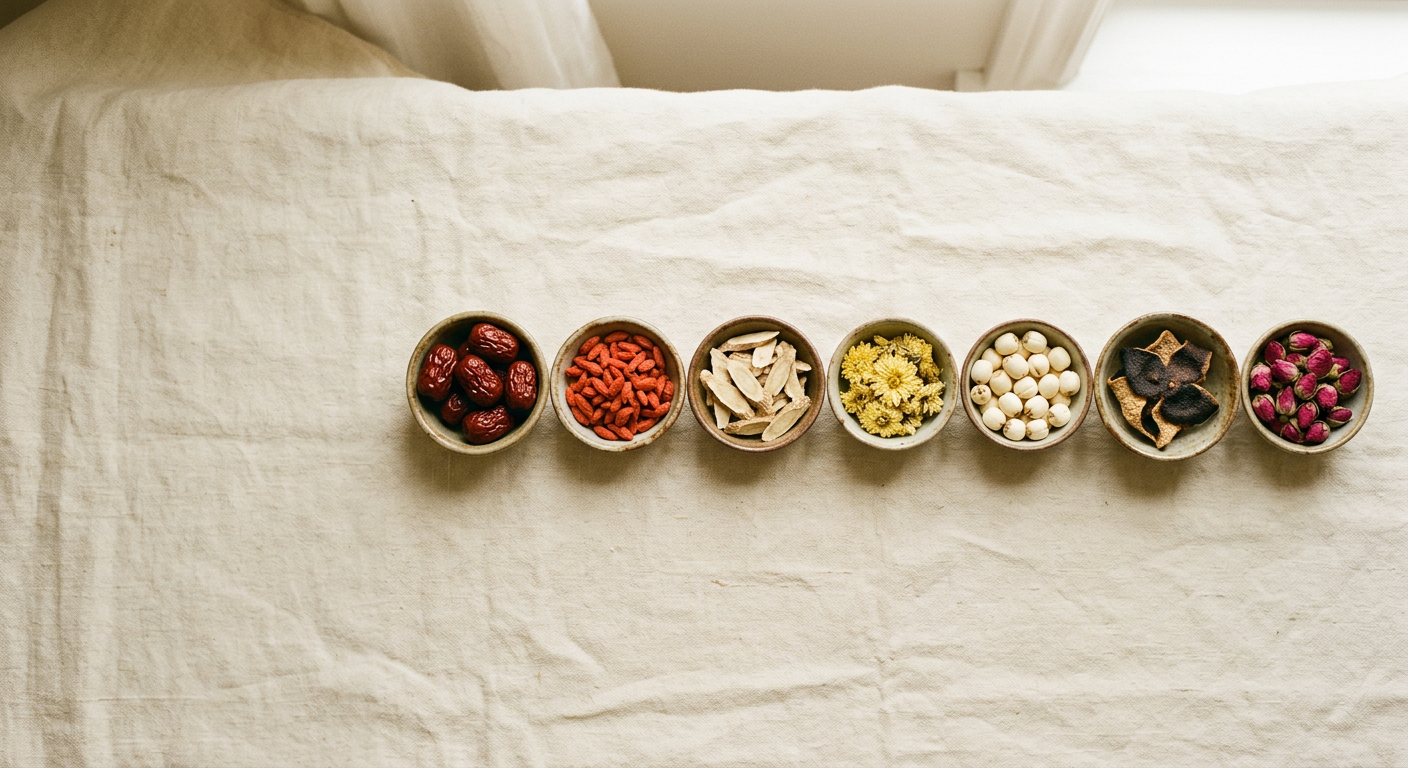
Most Traditional Chinese Medicine (TCM) soup herbs have three names: the Chinese characters (e.g. 北芪), the pinyin (Huang Qi), and an English common name (Astragalus Root). The Latin botanical name — such as Astragalus membranaceus — is the most reliable way to confirm you are buying the right herb.
Key takeaways
- Always match the Latin name, not just the English nickname.
- 熟地 (Shu Di) and 生地 (Sheng Di) are the same plant processed differently — not interchangeable.
- Cantonese names (e.g. "Gei Ji" for goji) often differ from Mandarin pinyin.
Why Chinese herbs have so many names
Herbs travel through Mandarin pinyin, Cantonese, and English trade names. The same root might be labeled "Bei Qi" in a Hong Kong shop and "Huang Qi" on a Mandarin label — both are astragalus.
Labels in Asian grocery stores are often Chinese-only, which is why we print the characters, pinyin, English and Latin name on every KinRoots Herbs bag.
Full glossary of 20 pantry herbs
Use the table below to translate any herb on your recipe card.
| Chinese | Pinyin | English | Latin |
|---|---|---|---|
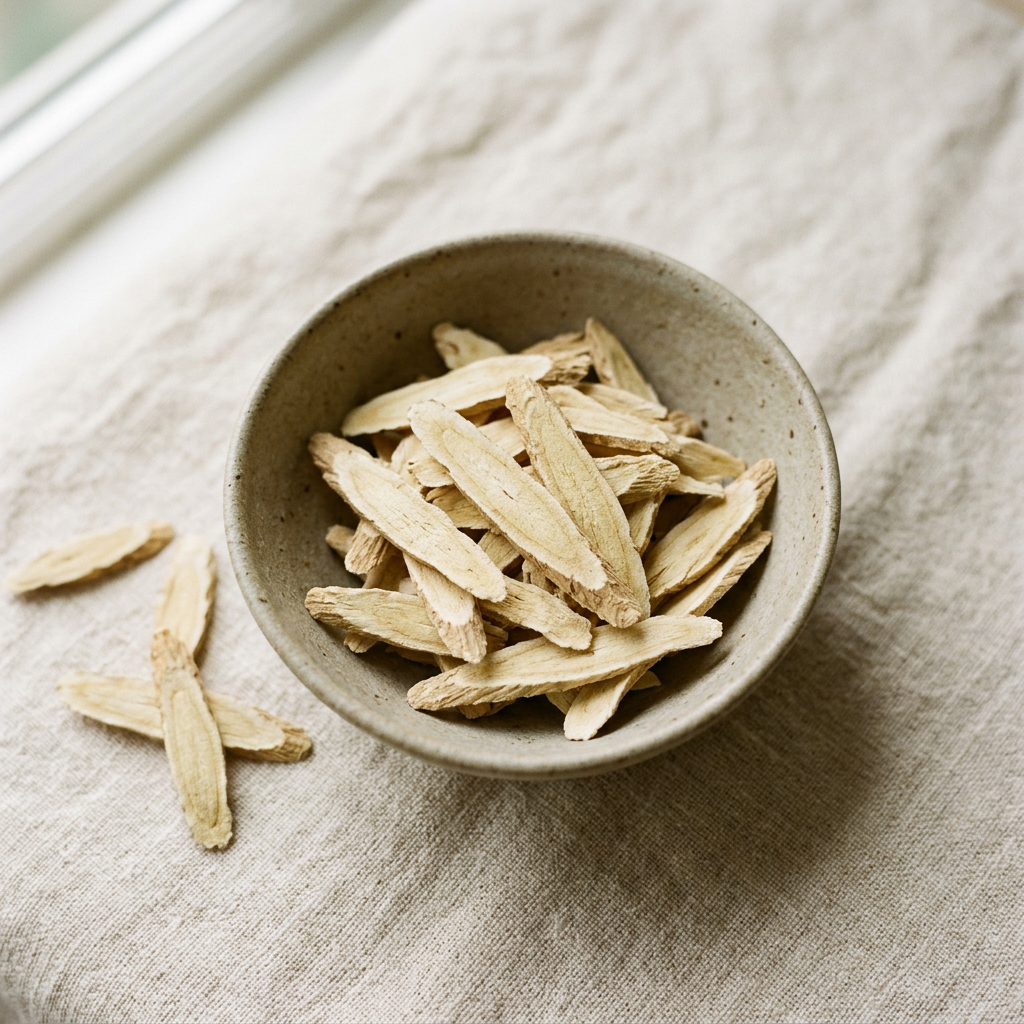
| 北芪 | Bei Qi / Huang Qi | Astragalus Root | Astragalus membranaceus |
| 红枣 | Hong Zao | Red Jujube Dates | Ziziphus jujuba |
| 当归 | Dang Gui | Dong Quai (Angelica Root) | Angelica sinensis |
| 酸枣仁 | Suan Zao Ren | Sour Jujube Seed | Ziziphus jujuba var. spinosa |
| 熟地 | Shu Di Huang | Prepared Rehmannia Root | Rehmannia glutinosa (prepared) |
| 生地 | Sheng Di Huang | Raw Rehmannia Root | Rehmannia glutinosa |
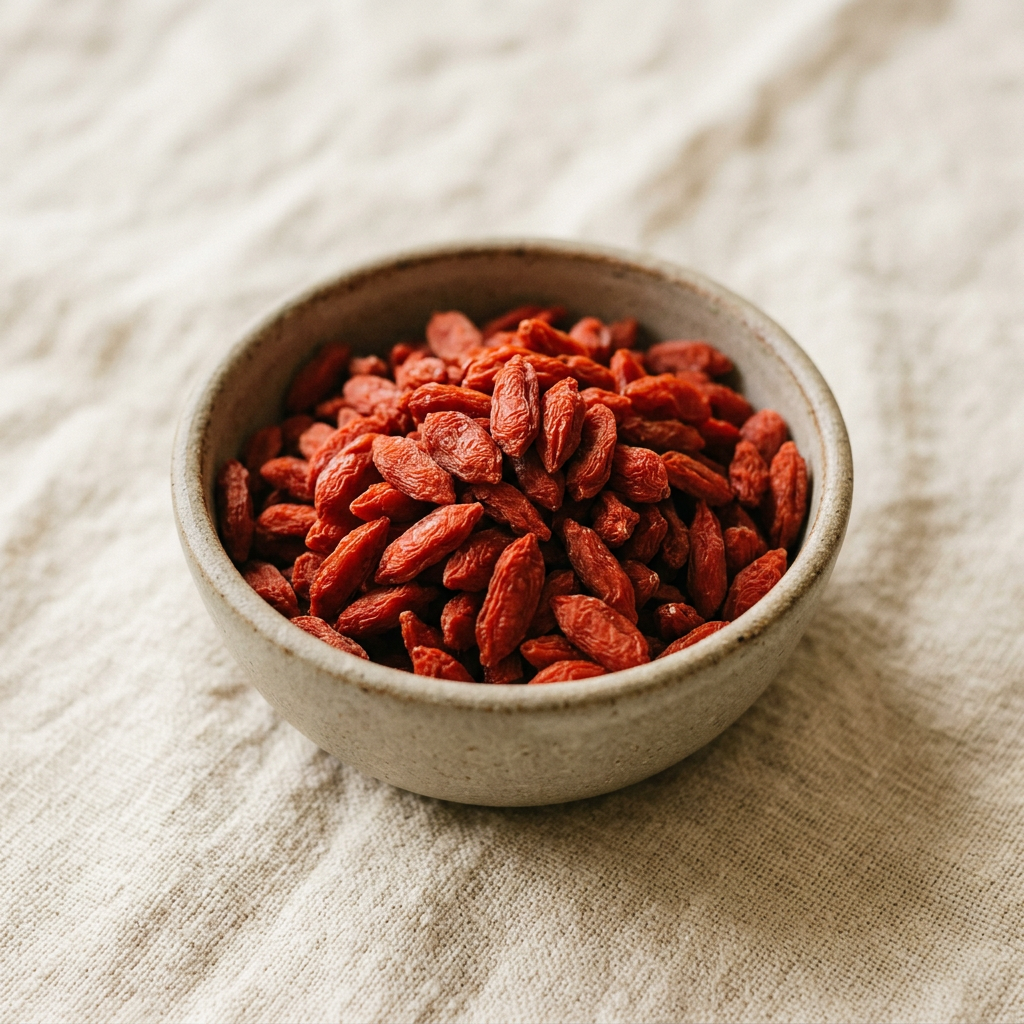
| 杞子 | Gou Qi Zi | Goji Berries | Lycium barbarum |
| 甘草 | Gan Cao | Licorice Root | Glycyrrhiza uralensis |
| 薏苡仁 | Yi Yi Ren | Job's Tears (Coix Seed) | Coix lacryma-jobi |
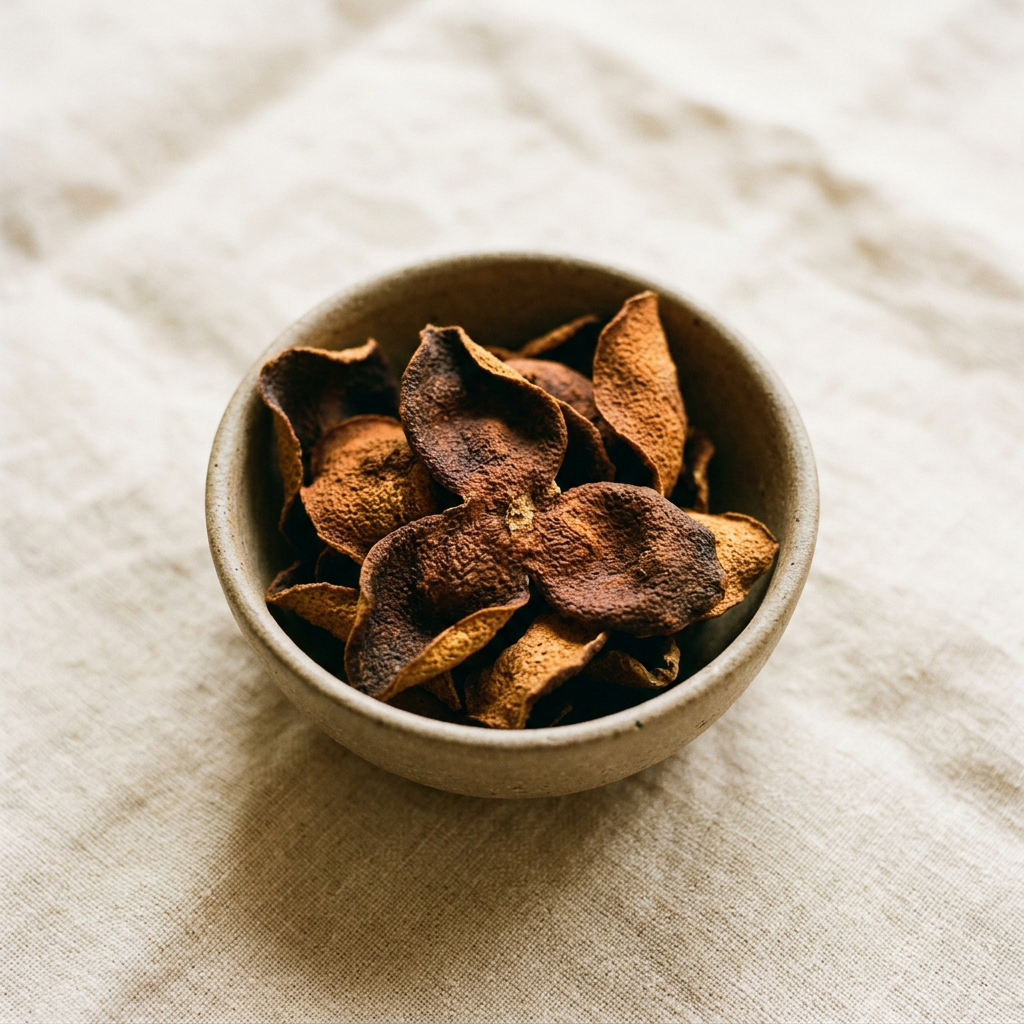
| 陈皮 | Chen Pi | Aged Tangerine Peel | Citrus reticulata |
| 茯苓 | Fu Ling | Poria Mushroom | Wolfiporia extensa (Poria cocos) |
| 芡实 | Qian Shi | Fox Nut (Euryale Seed) | Euryale ferox |
| 菊花 | Ju Hua | Chrysanthemum Flowers | Chrysanthemum morifolium |
| 玫瑰 | Mei Gui Hua | Rose Buds | Rosa rugosa |
| 白术 | Bai Zhu | White Atractylodes Rhizome | Atractylodes macrocephala |
| 白芍 | Bai Shao | White Peony Root | Paeonia lactiflora |
| 莲子 | Lian Zi | Lotus Seeds | Nelumbo nucifera |
| 黑桑葚 | Hei Sang Shen | Black Mulberries | Morus alba (black fruit) |
| 党参片 | Dang Shen Pian | Codonopsis Root Slices | Codonopsis pilosula |
| 川芎 | Chuan Xiong | Szechuan Lovage Root | Ligusticum chuanxiong |
Frequently asked questions
What is 北芪 in English?
北芪 (Bei Qi, also Huang Qi) is Astragalus Root, botanical name Astragalus membranaceus.
What is 杞子 in English?
杞子 (Gou Qi Zi) is Goji Berry, also called Wolfberry — Lycium barbarum.
What is 陈皮 in English?
陈皮 (Chen Pi) is Aged Tangerine Peel, the dried peel of Citrus reticulata aged for several years.
What is 党参 in English?
党参 (Dang Shen) is Codonopsis Root, often called "poor man's ginseng" — Codonopsis pilosula.
Traditional uses are described for educational purposes and are not medical advice. If you are pregnant, nursing or taking medication, consult a qualified healthcare provider before using herbs.