Shu Di vs Sheng Di: Prepared vs Raw Rehmannia Explained
What is the difference between 熟地 (prepared rehmannia) and 生地 (raw rehmannia)? Processing, taste, traditional use in Traditional Chinese Medicine (TCM) and how to choose.
5 min read · Updated
Quick answer
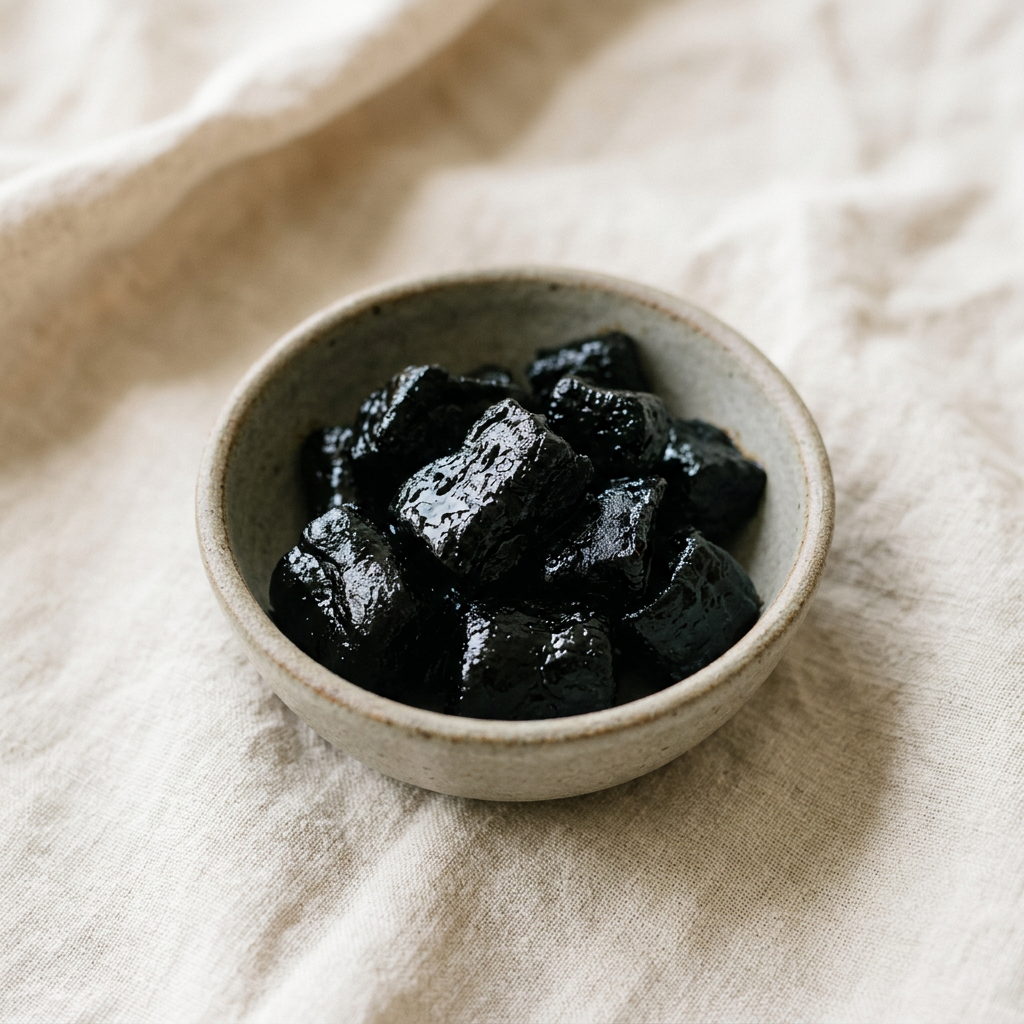
Shu Di (熟地) and Sheng Di (生地) both come from Rehmannia glutinosa root. In Traditional Chinese Medicine (TCM), Sheng Di is simply dried and is traditionally considered cooling; Shu Di is steamed and dried repeatedly until black and sweet, and is traditionally used as a warming blood and yin tonic. They are not interchangeable in recipes.
Key takeaways
- Same plant, different processing, different traditional use.
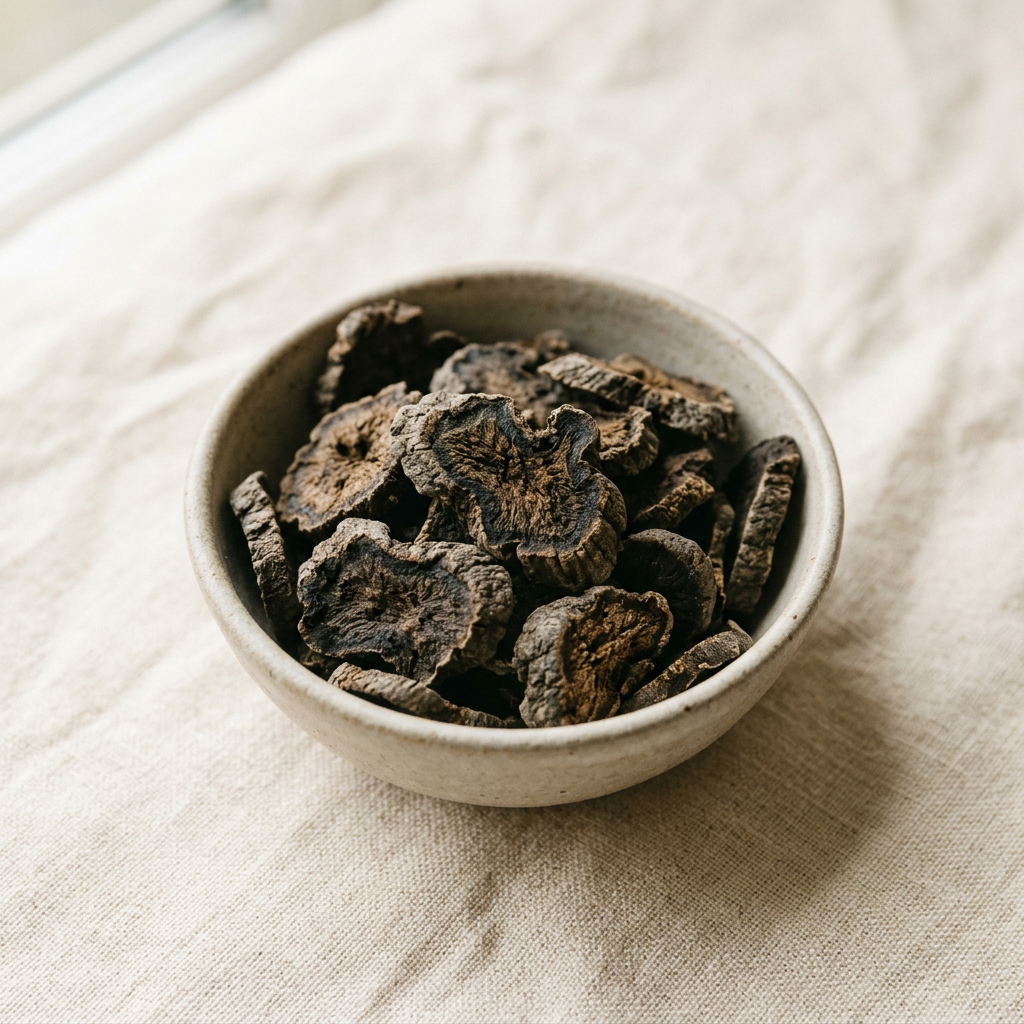
- Shu Di is black, glossy and sweet; Sheng Di is brown-grey and slightly bitter.
- Si Wu Tang calls for Shu Di, not Sheng Di.
How each one is made
Sheng Di is harvested, cleaned and sun-dried. Shu Di is traditionally steamed with rice wine and dried in cycles — classically "nine steamings, nine dryings" (九蒸九晒).
This processing converts starches into sugars, turning the root sweet, sticky and jet black.
Traditional use compared
In Traditional Chinese Medicine (TCM) food therapy, Sheng Di is used in cooling summer soups, while Shu Di is used in rich, nourishing formulas such as Si Wu Tang and Liu Wei Di Huang Wan.
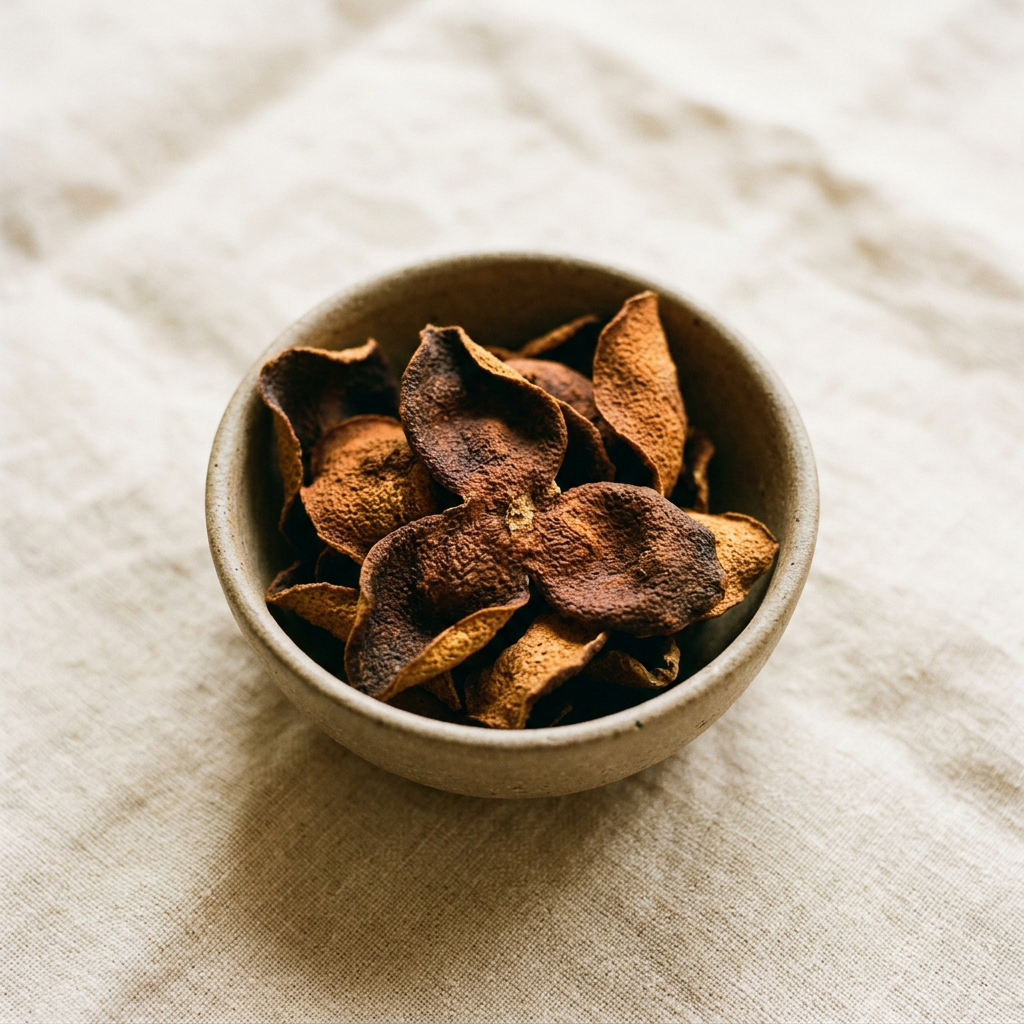
Because Shu Di is heavy, a slice of aged tangerine peel (chen pi) is often added to help digestion.
Frequently asked questions
Can I substitute Sheng Di for Shu Di?
Not in traditional recipes. They have opposite thermal natures — use the form your recipe specifies.
Why is Shu Di black?
Repeated steaming and drying caramelizes the root’s natural sugars, turning it black and glossy.
Traditional uses are described for educational purposes and are not medical advice. If you are pregnant, nursing or taking medication, consult a qualified healthcare provider before using herbs.